
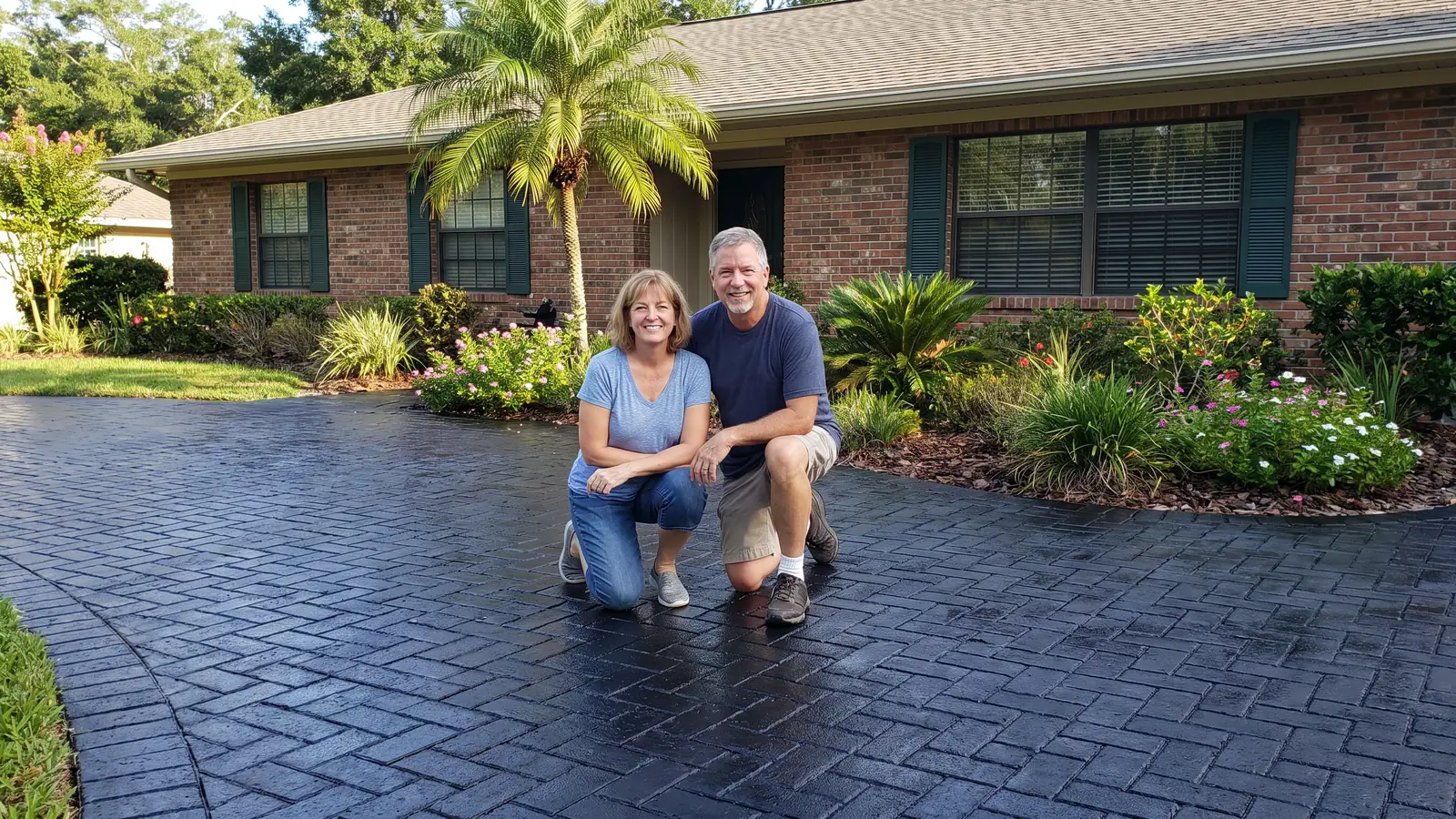
Paver sealing for Sandalwood homes
Paver Sealing in Sandalwood, FL
On Hawaii Drive or Fiji Court in Sandalwood, tired pavers can look fresh again, so call (904) 842-3269 for an estimate.
- Brings out deeper paver color
- Fresh joint sand helps lock pavers in place
- Gives weeds less room to grow
- Makes the surface easier to keep clean
- Free estimate, no obligation
Request a Free Estimate
Free, no obligation.
Fast, careful paver sealing in Sandalwood
Paver sealing in Sandalwood starts with a free estimate, and a local contractor washes, re-sands and seals driveways, walkways and patios. The neighborhood sits about 6 miles from both downtown Jacksonville and the beaches. After you get your free estimate, an answer should reach you inside 1 business day, and often much faster.
Think of the driveway at the end of a long week, the one the whole family walks across a dozen times a day. The color has gone flat, a few weeds stand in the joints, and there is a dark strip where the sprinkler hits. After a wash, new sand and a coat of sealer, the surface goes back to one steady color. Call (904) 842-3269, describe what you see, and the estimate carries no obligation.
Why hire a local paver sealing contractor in Sandalwood?
Sandalwood has been building out since 1960, so most pavers here have years of sun and storms behind them. A local contractor knows how that shows up, and you can get your free estimate to hear what your lot needs.
Free look, written price
Someone visits your Sandalwood lot, walks the drive, measures the pavers and puts a price in writing. You owe nothing for the visit.
Check it against the range
Published prices in Northeast Florida run from $1.75 to $3.25 per square foot. A Sandalwood bid should sit in that band or explain why not.
Matte or wet look
A wet look darkens color like fresh rain, while natural matte changes nothing. Pick the one that suits your house and your parking habits. Many owners ask to see both on a spare paver before they decide.
Owners and landlords
The estimate is free for owners and landlords alike, and nobody is pushed to sign. Replies come within 1 business day, usually much sooner.
Get Your Free Estimate in Sandalwood
Tell us about your pavers in Sandalwood.
Free, no obligation
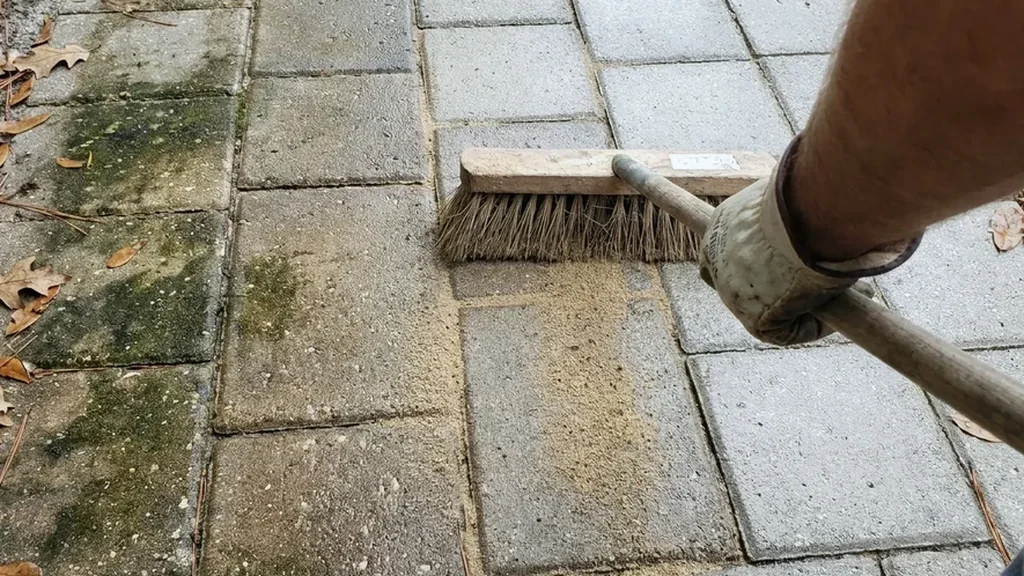
What paver problems show up most in Sandalwood?
Flat, sandy ground that lets joints slump
The USDA Pottsburg soil series, first described in Duval County, is fine sand on flats, with a seasonal high water table 0 to 24 inches down for part of the year. That is a county-level fact. One Jacksonville firm names sinking and washouts as the leading way pavers fail. When unsealed joint sand washes out, storm water reaches the base and erodes it, so a low corner today can grow into a dip. Catching it early is cheaper than rebuilding later, and the contractor can show you where the joints have already gone soft.
Sun that bleaches the color
Bare concrete pavers show sun fade within 3 to 5 years, says a Jacksonville firm. Another puts full-sun driveways at about 18 to 24 months between reseals and shaded walkways at about 24 to 36 months. Jacksonville July afternoons average about 92 degrees. If your driveway faces open sky, expect the color to go flat first. Back patios also take sunscreen and furniture scuffs, which one company says wear a coat down on pool decks. Color loss is slow, which is why many owners only notice it when a neighbor's freshly sealed driveway sits next to theirs.
Weeds and ants along the edges
Safe Touch warns that sealing over empty joints brings the weeds right back. Landscape Ontario says lost joint sand widens the joints and lets soil in, and that low joints should be topped up and swept clean. Ant hills along the edge point the same way. Open joints are the signal that sand comes first and sealer comes second. Pulling weeds without refilling the joints only clears space for the next batch.
An old coat gone white or flaky
A Jacksonville company says sealer that turns milky, white or flaky usually means trapped moisture or too many coats. A cost guide says failed sealer must be stripped before a new coat. One profile finds that 42 percent of Sandalwood parcels are not owner-occupied, so who sealed the drive last, and with what, is often unknown. Before picking a new product, the contractor looks at what is already down. If you bought the house with the pavers already down, ask the seller or the neighbors whether anyone remembers the product.
Tire marks from daily driving
Walk Score gives Sandalwood a 14 and says almost all errands require a car. That means tires turning on the same pavers every day, backing out at dawn and pulling in at dusk. A Jacksonville company says turning tires loosen joint sand and let pavers creep, and that driveways collect oil drips and tire marks. A second firm says oil and grease sit on top of a sealed paver, so most spills rinse off. For a drive that carries the school run, the grocery run and the commute, that matters.
Are pavers on Sandalwood's older streets different from newer Southside lots?
Often yes, because the homes here span almost sixty years. A real estate profile of the Sandalwood community counts 296 homes built from 1960 to 2019, with a median year of 1973. A driveway on a 1960s street may have been redone more than once, while a newer lot may be on its first coat. Say how old your house is when you get your free estimate.
Streets in the older part of the neighborhood carry island names, a small clue that the plan dates to 1960,, such as Hawaii Drive, Kusaie Drive, Fiji Court, Luana Drive and Indies Drive. Close by are Sandlewood Trace, 125 homes from 1960 to 1998, and Beach Road Farms, with 283 homes. The builder Pearce-Uible started Sandalwood in the spring of 1960. Call (904) 842-3269 and name your street so the contractor can picture the era and the likely paver style.
Many owners here rent their homes out, since the same profile puts 42 percent of parcels as not owner-occupied. A landlord can use a free estimate to plan paver work between tenants, and an owner can use one to decide whether to wait a season. A Jacksonville cost guide also says people planning to sell within two years often book paver work as pre-listing prep. To compare numbers for your own house, get your free estimate.
What does paver sealing cost in Sandalwood?
Northeast Florida shops list $1.75 to $3.25 for each square foot of wash, sand and seal. The median Sandalwood home has about 1,388 square feet of living area, so many paver jobs here may be modest. Small jobs cost more per foot, one Jacksonville cost guide notes, since prep time stays about the same. Homes with a pool deck, a back patio and a front walk can be priced together, which usually lowers the per-foot cost, so get your free estimate to price your lot.
A sound bid, says the same guide, includes a walkthrough, a written scope, itemized prep, and the sealer brand and finish by name. Old sealer that has turned white or flaky has to be stripped first, which adds to the total. Ask for those lines in writing. If a quote leaves any of them out, call (904) 842-3269 and ask the contractor to add them, since a clear scope keeps the final bill close to the first number.
| Paved area | Typical example | Clean, sand and seal |
|---|---|---|
| 300 sq ft | Small patio or walkway | $525 to $975 |
| 600 sq ft | Two car driveway | $1,050 to $1,950 |
| 1,000 sq ft | Large driveway or pool deck | $1,750 to $3,250 |
| 1,500 sq ft | Driveway plus pool deck | $2,625 to $4,875 |
Math based on the $1.75 to $3.25 per square foot that Northeast Florida paver companies publish. Your contractor sets the actual price after seeing the surface. Repairs, leveling and stripping failed sealer are usually extra.
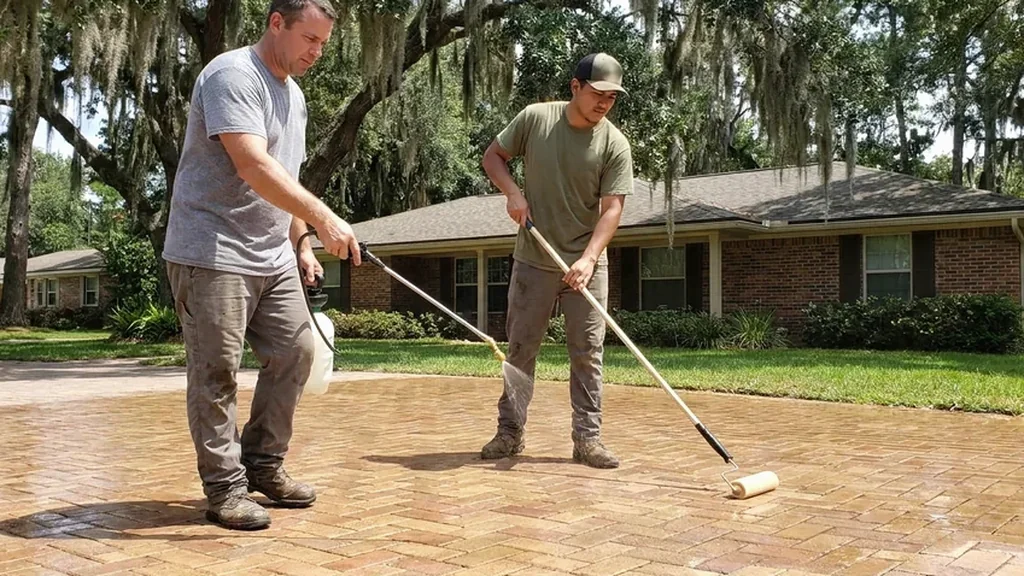
How does a paver sealing job work in Sandalwood?
Check the joints and the old coat
The contractor walks your Sandalwood driveway and looks at the joints, the edges and any earlier sealer. With a median living area near 1,388 square feet, many homes here have compact paver areas that can be measured in one pass. A dip or a lifted section is repaired first, because sealing preserves whatever is under it. If the surface is peeling or hazy, the old product is identified before anything new goes on. You get the plan and the price in the same visit, so there is no second trip to hear the number.
Wash off the grime, oil and sprinkler rust
Cleaning removes dirt, mildew and tire marks. Oil and rust spots are pre-treated, and a Jacksonville company says some deep stains will not come out completely. Plants beside the drive are rinsed and covered, and runoff is kept off the street where it can be. Pressure stays matched to the surface, since a trade supplier warns that more than 3,000 PSI on standard concrete pavers risks stripping the top.
Put the sand back and sweep it
Washing pulls out joint sand, so the joints are refilled with silica sand and swept clean, with extra at the low edges. Full joints leave weeds almost no room to grow and stop the surface from shifting under tires. On sandy Duval County ground, this step is the one that holds the job together. A contractor also tops up the low edges where sand has drained toward the gutter, so the whole surface sits level again.
Wait for a dry surface
A Surebond bulletin says most sealers need the surface dry for 24 hours after cleaning or rain. Jacksonville gets about 52 inches of rain a year, mostly May to September, so the contractor watches the sky. A Jacksonville company says one afternoon thunderstorm can wash fresh sand out of the joints. A damp patio behind the house takes longer to dry than a sunny front drive, so each area gets its own check.
Seal, roll and keep off for a day
Next comes the spray, then a roller pushes sealer into the joints. One Jacksonville company says to allow 2 to 4 hours before foot traffic and 24 hours before vehicles. Park on the street that evening, and note the product name for your records. A photo of the finished drive helps if you ever list the house. Keep sprinklers off for the time the product label requires, since water on a fresh coat can leave marks.
Complete paver services in Sandalwood
Most Sandalwood driveways are a one-day job, according to a Jacksonville sealing company. The order stays the same: wash, new sand, dry time, then sealer. Larger patios and pool decks take longer because there is more surface to wash, dry and roll, and a second coat adds time too. To ask about your timeline, call (904) 842-3269.
Each surface wears differently. Driveways take tires and oil, front walks take feet, and back patios take chairs, grills and sunscreen, which one company says scuff pool decks. A lanai floor under a screen needs its rinse water managed differently from an open drive. Tell the contractor what you have when you get your free estimate.
Sealers come water-based or solvent-based, and water-based cannot go over solvent-based, a rule that surprises many owners. A paver maker says acrylics are the economical choice but may scratch easily, while polyurethanes are tougher and typically cost more. Whichever it is, ask for the product name and finish in writing. Call (904) 842-3269 and ask which one is going on your pavers.
One Jacksonville company says spring and fall often give the most stable weather for sealing. Summer storms arrive fast on the Southside, so a July job can move a day or two. Cars come back after about a day, so plan the week around that. To pick a date, get your free estimate.
Questions to ask before you hire
- How long do the pavers dry after cleaning before the first coat goes on?
- What deposit, if any, is due before the work starts?
- How do you protect my plants, my pool water and my screen enclosure?
- Who do I call if the finish turns cloudy or starts to peel?
- What happens to the job if it rains soon after the sealer is down?
- Is the finish glossy, satin or natural, and can I see a sample first?
- Can you show me the sealer's product sheet before you start?
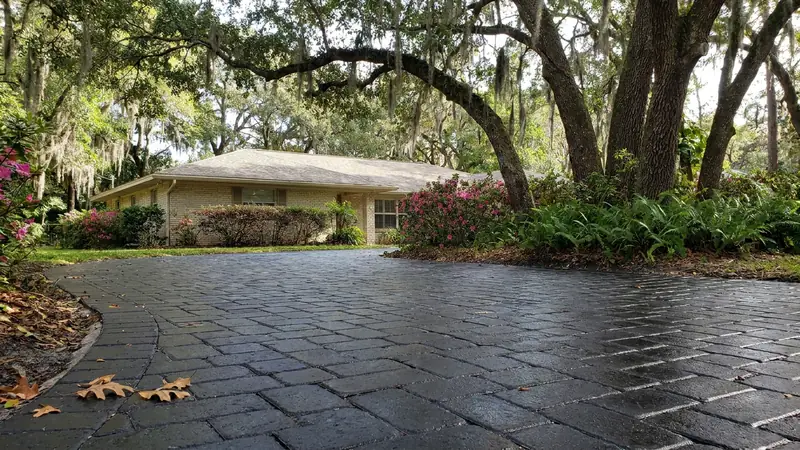
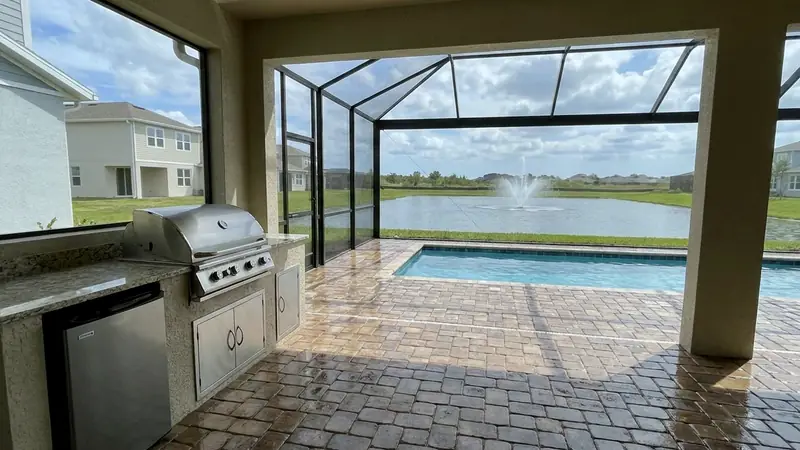
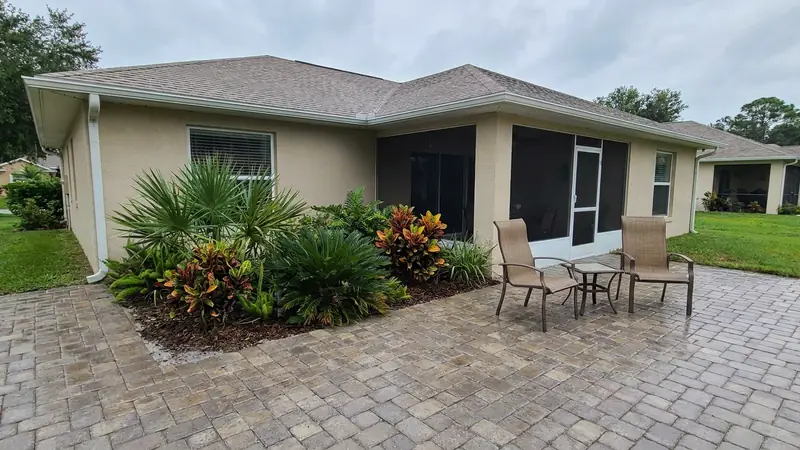
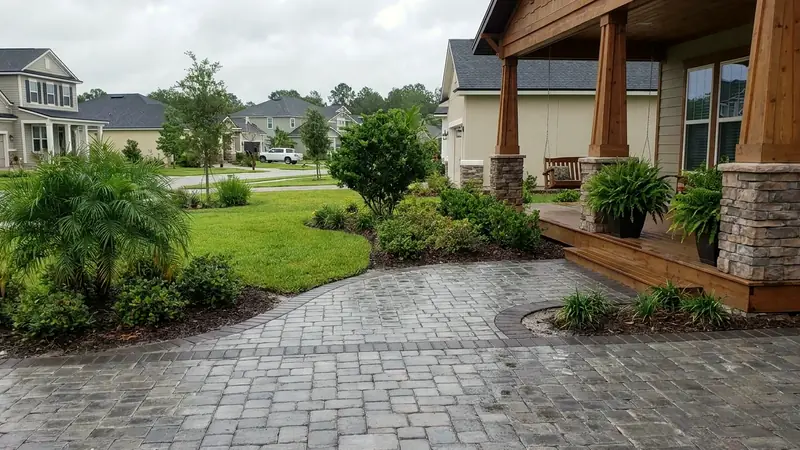
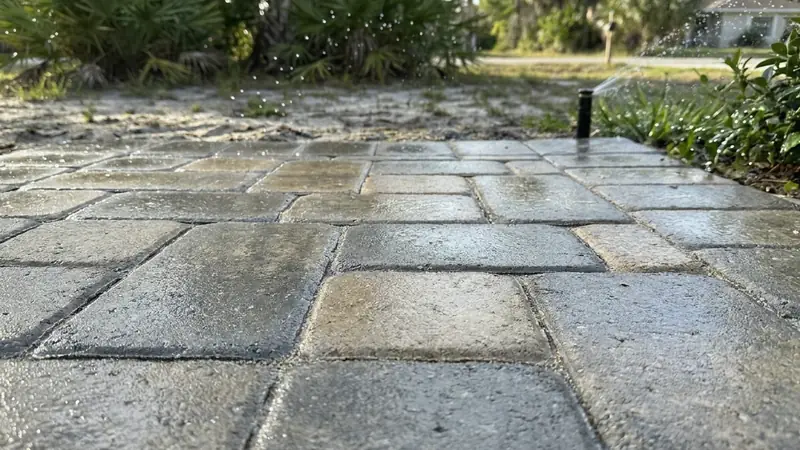
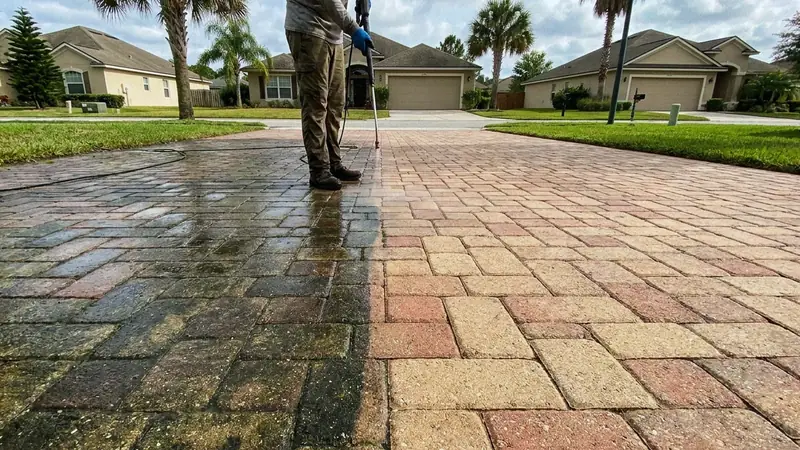
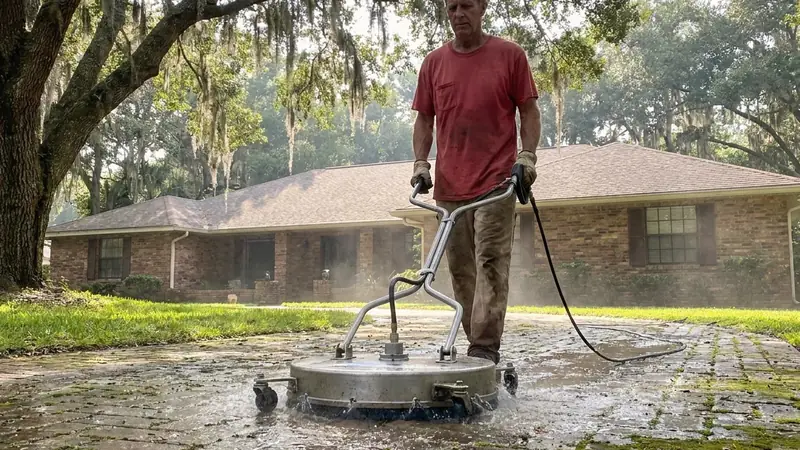
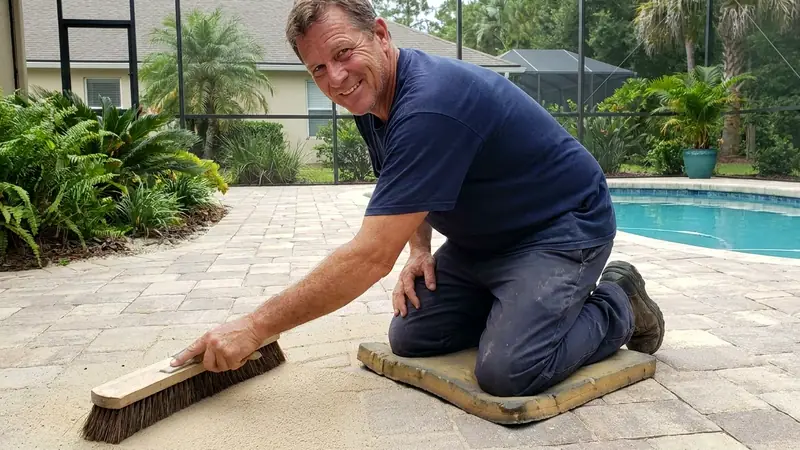
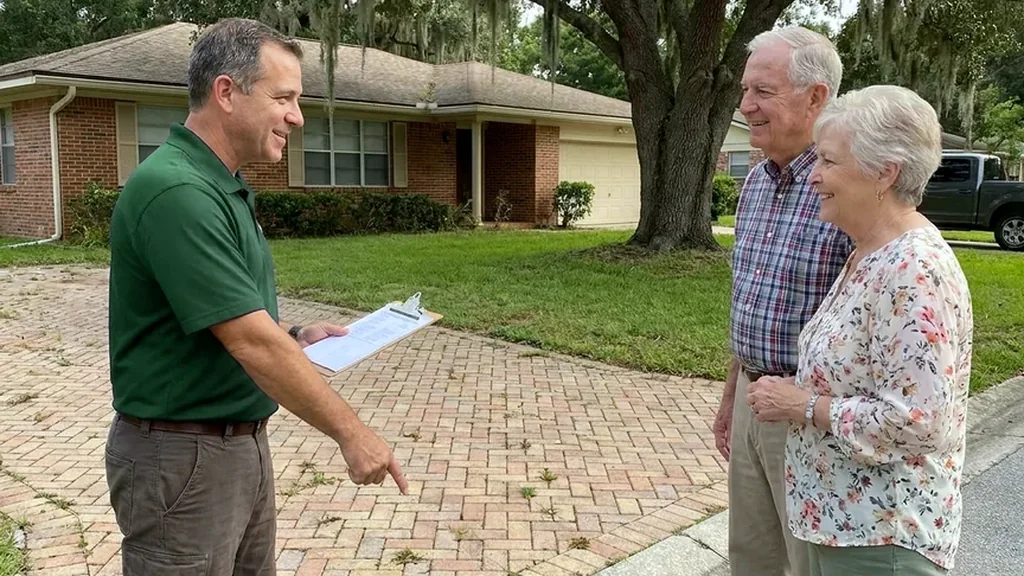
What do sealed pavers look like around Sandalwood?
Why local matters in Sandalwood
A contractor who works the Southside knows that homes here range from 1960 to 2019. That means one street can hold three eras of pavers and three different coats. The first visit is a look, not a guess, and it comes with the right questions about the old coat. To reach a contractor in Duval County, call (904) 842-3269.
Local work also means knowing how water moves on flat, sandy lots in a wet summer, where a puddle can sit for a day after a big storm. The contractor checks where the runoff leaves your drive and where joint sand has already gone. Someone new to the area may skip that check, and the sealer then goes over joints that keep draining. You can get your free estimate to ask how the visit goes.
Many Sandalwood homes are rentals or about to be sold. A local contractor can work around a tenant's schedule or a listing date. A rental turnover or an open house is a deadline, and a clear plan helps you meet it. If either applies to you, get your free estimate and say so.
How did Sandalwood start, and what is around it?
Sandalwood began developing in the spring of 1960, about halfway between downtown Jacksonville and the beaches. Ads at the time pitched it as halfway between business and pleasure, and the builder-developer had an office on Beach Boulevard. After the Mathews Bridge opened in 1953, the Arlington area grew faster than any other part of the city for two decades, and Sandalwood was one of many planned subdivisions. Near any of those streets, call (904) 842-3269.
Sandalwood High School sits at 2750 John Prom Boulevard and opened in 1971 as a junior-senior high. Pottsburg Creek, fed by rain and retention ponds, runs through the Southside and passes under J. Turner Butler Boulevard. If you live near either one, or near the Florida State College at Jacksonville south campus on Beach Boulevard, get your free estimate.
Frequently Asked Questions
How long do paver sealers last in Sandalwood?
Typical quotes for coat life run two to five years. PaverGuard counts roughly 18 to 24 months for sunny drives and 24 to 36 for shaded walks. Water that soaks in and does not bead means the coat has run out. Run that quick test after a rain, since beading is easy to see on a wet driveway.
Is it good to seal pavers in Florida, even in Sandalwood?
Yes, for color and joint protection. In a place with this much sun and summer rain, that protection earns its keep. A Jacksonville company says sealing concrete pavers in Florida significantly reduces UV fade, joint washout and mildew. You pay for it with a new coat every few years. In Sandalwood, where sun and summer storms are routine, that coat gives your joints and your color a real shield.
Can a contractor clean, sand and seal my pavers in one visit?
Usually, yes. A Jacksonville sealing company says most driveways are finished in one day, in the order wash, fresh sand, dry time, then sealer. Larger areas may take two visits, especially a long drive plus a back patio. Ask which one applies to your layout, so you know how many days to clear the drive. A one-car garage and a long side drive can need different plans.
Why does paver sealing cost so much in Sandalwood?
Most of the price is prep, the unglamorous part that decides how long the coat holds. One Jacksonville company spends about two to three hours of prep for each hour of sealing. Stripping an old failed coat adds to it. A quote that lists the prep steps one by one is easier to trust than one number with no detail.
How much does paver sealing cost in Sandalwood?
Local shops publish $1.75 to $3.25 a square foot for the whole wash, sand and seal. A failed old coat means stripping, which raises the price. Ask for the total square footage in writing, so you can check the per-foot price against the range yourself.
Does my association need to approve the sealer?
It depends on your declaration, which is the legal document your community recorded. One Southside paver page says natural sealer can pass as upkeep, but gloss or color boosters are more likely to need a yes. Florida Statute 720.3035 lets an association review changes only to the extent its rules say so.
What happens if my old sealer is white or peeling?
It has to be dealt with first, before anything new goes on. A cost guide says white, hazy or flaking sealer must be stripped before a new coat goes on. That adds time and money, so ask the contractor to inspect it before quoting. Peeling is a clue that moisture got under the old coat, and the new coat needs a clean start.
When can I park on freshly sealed pavers?
One Jacksonville company says sealant needs 2 to 4 hours to dry before foot traffic and 24 hours before vehicles. Cool, damp weather can stretch that, and heavy dew counts as damp. Morning shade from a neighbor's tree can add an hour or two. A shaded walkway may need the longer wait. The contractor can give the exact wait for the product on your pavers.
Nearby areas we serve
Ready for a Free Estimate in Sandalwood?
Call (904) 842-3269 and tell us about your pavers.
Free, no obligation